Blutree Orthopedic Implants
Blutree Orthopedic Implants
Blutree Orthopedic Implants
Leading selection of orthopedic nails designed for high-precision surgical requirements in the DACH region.
Austria stands as a global beacon for high-quality medical standards and innovative orthopedic treatments. For any Intramedullary Nails Factory in Austria, the benchmark is set by the nation’s rigorous adherence to EU Medical Device Regulations (MDR) and a legacy of surgical excellence. From the medical universities in Vienna and Graz to the trauma centers in Innsbruck, the demand for precision-engineered intramedullary nails is driven by a unique combination of high-energy trauma cases and a sophisticated geriatric care infrastructure.
The Austrian industrial sector, particularly in regions like Upper Austria and Styria, is renowned for its "hidden champions"—companies that specialize in high-precision metallurgy and medical engineering. While many global brands dominate the market, the search for localized Intramedullary Nails Factories often leads to partnerships that prioritize customized surgical solutions. These factories focus on the development of titanium alloy implants that offer superior biocompatibility and fatigue resistance, essential for the demanding conditions of human physiology.
Austrian medical technology hubs are currently focusing on "Smart Implants." Modern intramedullary nails are being integrated with sensor technology to monitor bone healing and load distribution in real-time, providing surgeons with data-driven insights post-operation.
Factories serving the Austrian market utilize advanced CNC multi-axis milling and Swiss-style turning to ensure that interlocking holes and nail cannulations are accurate to the micron. This precision is vital for the "Expert" series of nails used in complex fractures.
One cannot discuss the Intramedullary Nails industry in Austria without mentioning the "Alpine Factor." Austria is a premier destination for skiing and mountaineering, which unfortunately results in a high incidence of high-velocity tibial and femoral fractures. Surgeons in regions like Tyrol and Salzburg require intramedullary nails that can be deployed rapidly in trauma settings, offering immediate stability to the patient.
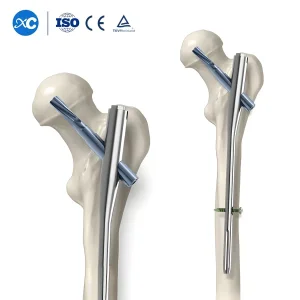
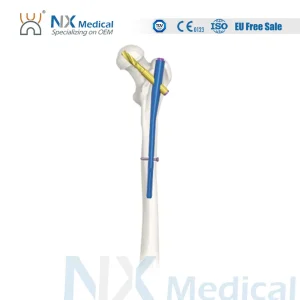
Furthermore, Austria’s aging population has led to an increase in fragility fractures. Proximal Femoral Nails (PFNA) have become the gold standard in Austrian hospitals for treating intertrochanteric fractures in elderly patients. The focus here is on minimally invasive techniques that allow for early weight-bearing, reducing the complications associated with prolonged bed rest in geriatric patients.
Founded in 1999, our company has evolved into a cornerstone of orthopedic implant R&D, bridging the gap between high-tech manufacturing and clinical necessity.
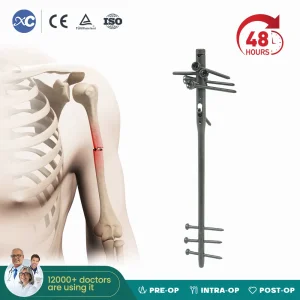
Our commitment to quality is reflected in our expansion across the globe, including established offices in the United States and the Netherlands, ensuring that our Intramedullary Nail systems meet the diverse regulatory requirements of international markets. Whether it is a humerus nail for a trauma center in Linz or a femoral interlocking system for a clinic in Vienna, our production lines are optimized for global standards.
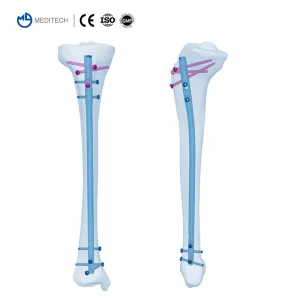
The evolution of the Intramedullary Nails Factory in Austria and beyond is currently being shaped by three major trends: Material Innovation, Customization through 3D Printing, and Digital Integration.
1. Advanced Materials: While Titanium remains the king of implants due to its elastic modulus being closer to bone than stainless steel, new research is looking into carbon-fiber-reinforced PEEK nails. These offer radiolucency, allowing surgeons to monitor the healing process through X-rays without the "shielding" effect of metal.
2. Anatomical Customization: Using CT data, factories are now able to simulate the intramedullary canal of a patient before surgery. This "Patient-Specific" approach ensures that the bow of the nail perfectly matches the patient's anatomy, reducing the risk of cortical penetration or malalignment.
3. Robotic-Assisted Interlocking: One of the most challenging parts of IM nailing is the distal interlocking screw placement. New systems being tested in Austrian research clinics utilize electromagnetic navigation to guide the surgeon, reducing radiation exposure from C-arm fluoroscopy.
Explore our full range of interlocking nails and surgical instruments for trauma fixation.
Specialized expertise in Orthopedic Research and Global Medical Supply Chains.
Selling medical devices in Austria requires more than just a CE certificate. It requires a commitment to the highest levels of biocompatibility and clinical evidence. Every Intramedullary Nail produced by our partner factories undergoes rigorous testing including fatigue strength tests and corrosion resistance analysis according to ASTM and ISO standards.
The Austrian health system (Österreichische Gesundheitskasse - ÖGK) and private clinics demand transparency in the supply chain. Our factory processes are ISO 13485 certified, ensuring that every batch of titanium used in our femoral or tibial nails is traceable back to its source. This level of accountability is what makes us a preferred partner for orthopedic distributors in Central Europe.
Whether you are looking for a bulk supply for a hospital network or a reliable OEM partner for localized branding in Austria, our systems offer the versatility and reliability required for modern trauma surgery. Our products are designed not just to mend bones, but to restore mobility and quality of life for patients across the Austrian Alps and beyond.