Blutree Orthopedic Implants
Why is product standardization important for orthopedic implants? The question reaches beyond factory efficiency. It concerns the small details that shape surgical confidence, patient safety, and long-term clinical evidence.
A standardized implant system can make dimensions, materials, instruments, packaging, and documentation more predictable. In an operating room, that predictability matters. A surgeon can recognize the tray layout quickly. A nurse can confirm labels without hesitation. A hospital can monitor stock, expiry dates, and recalls more accurately. Engineers can compare performance across production batches. Researchers can study outcomes with fewer confusing variables.
W. Edwards Deming, a leading authority on quality management, said, “Without data, you’re just another person with an opinion.” His statement applies strongly to orthopedic implants. Reliable standards create reliable data. They support testing, traceability, supplier evaluation, and controlled design changes.
Still, standardization is not a magic solution. Not every patient has the same anatomy. Not every surgical technique benefits from one fixed design. Excessive uniformity may restrict innovation or overlook local clinical needs. That uncomfortable point deserves attention.
The strongest approach combines disciplined standards with carefully justified flexibility. It preserves critical specifications while allowing evidence-based improvements. It can also reduce avoidable variation in coatings, tolerances, sterilization processes, and instrument compatibility.
This article explores the top 10 reasons to standardize orthopedic implants. It examines practical benefits, clinical limitations, manufacturing realities, and the evidence needed for responsible decisions. The goal is not simple uniformity. It is safer consistency with room for better ideas.
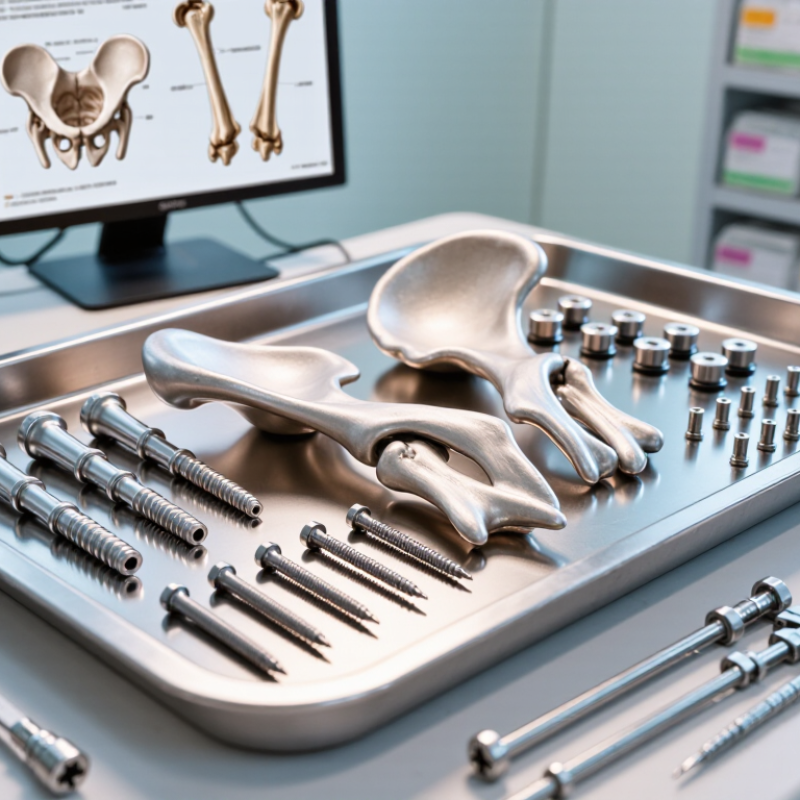
Top 10 Reasons to Standardize Orthopedic Implants?
Definition and Scope: Standardization Across Orthopedic Implant Systems
Standardization means creating shared rules for implant dimensions, interfaces, materials, labeling, and clinical data. It does not mean forcing every patient into one design. Anatomy varies. Surgical judgment still matters. The scope also includes compatible instruments, sterilization instructions, packaging, traceability, and revision planning. Clear terminology helps hospitals compare systems without confusing similar measurements.
Clinical registries show why this matters. The UK National Joint Registry’s 21st Annual Report, published in 2024, tracks millions of hip, knee, shoulder, and ankle procedures. Its data demonstrates the value of consistent implant identification and outcome reporting. Without common fields, early loosening or revision patterns can remain hidden. OECD Health Statistics 2023 also reports wide international variation in joint replacement activity, making comparable definitions essential for meaningful benchmarking.
In practice, standardization can reduce training time and simplify inventory decisions. It may also support safer handovers when surgeons change hospitals. Small details matter, such as a clearly marked taper or a readable lot number. The uncomfortable point is that standards can become too rigid. A poorly designed specification may limit useful innovation. Experienced teams should review standards regularly, using registry evidence, imaging, surgical feedback, and patient-reported outcomes. Perfect uniformity is unrealistic. Better consistency is achievable.
Definition and scope: standardization across orthopedic implant systems
The chart counts representative international standards families associated with each standardization objective. Examples include ISO 14971 for risk management, ISO 10993 for biological evaluation, ISO 5832 for metallic materials, ISO 7206 and ISO 14242/14243 for implant performance and wear, ISO 11135/11137/17665 for sterilization, ISO 11607 for sterile-barrier packaging, ISO 13485 for quality management, ISO 15223-1 and ISO 20417 for labeling and information, ISO 14155 for clinical investigations, and ISO 21534 for joint replacement implants. Requirements may vary by jurisdiction, implant type, and regulatory pathway.
Top 10 Reasons to Standardize Orthopedic Implants
The World Health Organization reports that 1.71 billion people live with musculoskeletal conditions worldwide. This figure includes arthritis, fractures, back pain, and other disorders affecting movement. Behind every statistic is a patient struggling to climb stairs, grip a cup, or return to work. Clinical demand is not abstract. It appears daily in operating rooms and rehabilitation clinics.
Standardized orthopedic implants can support more consistent surgical planning. Surgeons become familiar with measured sizes, instruments, and fixation methods. That familiarity may reduce avoidable delays during procedures. It can also simplify staff training and improve communication across hospitals. A nurse preparing a familiar tray knows what to expect. A biomedical engineer can monitor inventory more accurately. These practical gains matter when patient numbers continue rising.
Standardization may improve access, but it is not a cure-all. Patients have different bone quality, anatomy, activity levels, and healing risks. A uniform implant system should never replace clinical judgment. This is where the discussion becomes less comfortable. Too much standardization could limit suitable options for complex cases. Too little can create confusion, waste, and inconsistent results. Reliable decisions require clinical evidence, documented outcomes, and careful post-surgical follow-up. They also require honest review when an expected result does not occur. A stable process is valuable. Flexibility remains essential.
Standardizing orthopedic implants can make patient safety more measurable. The FDA reviews design, materials, manufacturing controls, and performance evidence before many implants reach the market. Its Medical Device Reporting system also collects adverse-event reports after clinical use. This oversight creates a common safety framework. It does not guarantee perfect outcomes.
Consistent implant dimensions can reduce confusion during surgery and simplify staff training. They can also improve inventory control and emergency replacement decisions. The National Joint Registry’s 21st Annual Report recorded more than four million joint replacement procedures, showing the value of long-term outcome tracking. Comparable designs make these outcomes easier to evaluate across hospitals and patient groups.
Small differences matter. A surgeon handling familiar instruments may reduce avoidable delays, although standardization cannot replace clinical judgment.
FDA recall and safety-communication databases show why traceability remains essential. A standardized implant should have clear identifiers, documented materials, and dependable performance records. These details help hospitals investigate pain, loosening, infection, or revision surgery. However, a uniform design can still fail in unusual anatomy or demanding activity.
That limitation deserves more attention. Standardization should support safer decisions, not force every patient into the same solution.
Data from the FDA’s CDRH annual reporting and registry-based surveillance can guide improvements, but reporting systems may contain incomplete or delayed information.
Top 10 Reasons to Standardize Orthopedic Implants?
Capacity Planning: US Joint Replacements May Reach 4.76 Million Annually by 2060
The United States may perform 4.76 million joint replacements annually by 2060, according to published projections in The Journal of Bone and Joint Surgery. That volume would place intense pressure on operating rooms, sterilization units, implant inventories, and trained surgical teams. The American Joint Replacement Registry’s annual reports also show expanding procedure capture and continued growth in hip and knee replacement data. Capacity planning cannot depend on today’s workload.
Standardized implant systems can make that future more manageable. Hospitals may reduce instrument trays, simplify staff training, and improve inventory visibility. A consistent femoral size on the shelf matters when a patient arrives early, not just during an annual purchasing review. Standardization may also support clearer outcome comparisons, especially when surgeons track alignment, revision causes, and recovery milestones. Small gains accumulate.
Yet standardization is not automatically safer or cheaper. Patient anatomy varies. Complex revisions still require broader options. The projection may also change with obesity trends, outpatient care, reimbursement policies, and surgical innovation. Our planning remains imperfect. That is precisely why teams should review utilization data, surgeon preferences, and registry findings together. The American Academy of Orthopaedic Surgeons emphasizes evidence-based evaluation, but evidence can lag behind practice. A practical model should therefore include contingency stock, periodic clinical review, and transparent criteria for exceptions.
| No. | Reason to Standardize | Relevant Evidence or Planning Data | Capacity-Planning Benefit | Recommended KPI | Priority |
|---|---|---|---|---|---|
| 1 | Prepare for long-term volume growth | US joint-replacement demand has been projected to reach approximately 4.76 million procedures annually by 2060, requiring scalable operating-room, staffing, and inventory models. | A narrower implant portfolio makes forecasted demand easier to translate into instrument, implant, sterilization, and storage requirements. | Forecast accuracy; implant availability rate; procedures supported per standardized system | High |
| 2 | Reduce inventory complexity | Orthopedic implant sets commonly contain multiple sizes, configurations, and backup options. Each additional configuration increases SKU, tray, and replenishment requirements. | Standardization reduces duplicate inventory and improves visibility of fast-moving and critical components across facilities. | Active SKU count; inventory turns; obsolete or inactive inventory value | High |
| 3 | Improve operating-room throughput | Consistent implant families and instrument layouts reduce variation in setup, case preparation, and intraoperative product selection. | Predictable trays and standardized pick lists can support shorter setup times and more reliable room turnover planning. | Room turnover time; tray setup time; on-time first-case start rate | High |
| 4 | Strengthen staff competency and cross-coverage | Higher procedure volumes increase the need for nurses, technicians, and sterile-processing personnel who can work across multiple rooms and sites. | A consistent implant and instrument platform shortens the learning curve and simplifies competency validation and relief staffing. | Training hours per employee; competency completion rate; cross-trained staff coverage | High |
| 5 | Increase supply resilience | Demand variability, transportation disruption, manufacturing interruptions, and procedure growth can create shortages when equivalent alternatives are not readily available. | Approved standard configurations and predefined substitutes make contingency planning and interfacility redistribution more practical. | Stockout rate; emergency-order frequency; days of supply for critical items | High |
| 6 | Improve sterile-processing capacity | Reusable implant instruments require inspection, decontamination, assembly, sterilization, storage, and tracking. Additional tray variety increases processing workload. | Fewer standardized tray designs simplify scheduling, quality checks, maintenance, and replacement planning for sterile-processing departments. | Tray turnaround time; instrument set utilization; missing or damaged instrument rate | High |
| 7 | Improve demand forecasting | Joint-replacement demand varies by procedure type, patient demographics, surgeon preference, seasonality, and referral patterns. | Standardized product families create cleaner historical demand data and improve forecasts by procedure, size, location, and time period. | Forecast error; planning-cycle time; forecast bias by procedure | Foundation |
| 8 | Support consistent quality and traceability | Implantable devices require accurate lot, catalog, size, and patient-procedure traceability. Variation increases the number of records and product combinations requiring control. | A controlled portfolio simplifies documentation, recall readiness, usage tracking, and review of product-related events. | Traceability completeness; documentation error rate; recall-response time | Foundation |
| 9 | Enable multi-site network coordination | Regional health systems increasingly coordinate elective surgery capacity across hospitals and ambulatory facilities. | Common implant standards allow inventory pooling, shared training, cross-site scheduling, and more flexible allocation of surgical capacity. | Interfacility transfer time; shared inventory utilization; cross-site case coverage | Medium |
| 10 | Improve total-cost visibility | Total cost includes implants, instruments, storage, sterilization, handling, training, emergency procurement, and unused or expired inventory—not only the purchase price. | Standardization makes utilization, contract compliance, waste, and procedure-level cost comparisons more transparent. | Cost per procedure; inventory carrying cost; unused implant and tray rate | Medium |
Planning note: The 4.76 million annual procedures figure is a long-range US demand scenario referenced in the title. Actual volumes will vary according to population growth, disease prevalence, clinical practice, access to care, reimbursement, technology adoption, and future epidemiological conditions. Standardization should be implemented with surgeon governance, clinical evidence review, patient-safety controls, and an approved exception process.
Standardizing orthopedic implants reduces avoidable variation in dimensions, materials, and manufacturing steps. ISO 13485 provides a structured quality management system for design control, risk management, supplier oversight, and corrective action. Every implant should have controlled drawings, approved specifications, and documented acceptance criteria. Records must connect raw material lots to machining, cleaning, inspection, and release. Traceability must be usable.
ASTM standards support practical verification through recognized test methods for fatigue strength, corrosion behavior, material properties, and dimensional performance. Teams should select standards that match the implant’s design, intended anatomy, and clinical use. Testing should include calibrated equipment, qualified personnel, defined sample sizes, and transparent reports. In practice, this framework helps engineers compare results across production batches and investigate failures with less guesswork.
Small details matter. A mislabeled container can weaken an otherwise strong quality system. Supplier changes also require documented evaluation, not informal approval. Training records should show competence, not merely attendance. Internal audits can reveal gaps before they affect patients, although audits are not perfect. A spreadsheet may hide inconsistent entries, and a checklist cannot replace technical judgment. Standards guide decisions, but experienced teams must explain why each requirement applies. Requirements should also be reviewed against current editions and applicable regulatory expectations.
It creates shared rules for dimensions, interfaces, materials, labels, and clinical data. It also covers instruments, sterilization instructions, packaging, and traceability. It does not mean using one design for every patient.
Consistent dimensions can reduce confusion during surgery and simplify staff training. Clear taper markings and readable lot numbers support safer implant identification. Standardization helps, but it cannot guarantee perfect outcomes.
Yes, hospitals may reduce duplicate instruments and improve stock visibility. A clearly labeled femoral size can matter when an unexpected patient arrives. Emergency replacement decisions may also become faster.
Familiar instruments can reduce avoidable delays during procedures. Shared systems may shorten training when staff move between hospitals. Still, experienced surgeons may need different options for unusual anatomy.
Common implant fields make revision rates, loosening, and recovery outcomes easier to compare. Long-term records can reveal patterns that individual hospitals might miss. Data may be incomplete or delayed.
Annual joint replacements in the United States could reach 4.76 million by 2060. Higher volume may pressure operating rooms, sterilization units, inventories, and trained teams. Planning should include backup stock.
It can, especially when specifications become too rigid. A uniform design may perform poorly in unusual anatomy or demanding activity. Standards need regular review. That remains difficult.
Teams should examine utilization data, surgeon feedback, imaging, patient-reported outcomes, and revision causes. They should also define clear exceptions for complex cases. Our assumptions may still be wrong.
Standardizing orthopedic implants creates a consistent foundation for design, manufacturing, testing, and clinical use across different implant systems. Why is product standardization important for orthopedic implants? It helps improve patient safety by supporting predictable dimensions, materials, performance requirements, and quality controls. With 1.71 billion people worldwide living with musculoskeletal conditions, consistent implant solutions are increasingly important for reliable treatment and long-term care.
Standardization also strengthens healthcare capacity as annual joint replacements in the United States could reach 4.76 million by 2060. Common specifications can simplify surgical planning, staff training, inventory management, and device evaluation while reducing unnecessary variation. Effective implementation should be guided by structured quality management, including ISO 13485 principles and relevant ASTM testing standards. Together, these frameworks promote traceability, repeatable manufacturing, thorough performance assessment, and continuous improvement, helping healthcare providers deliver safer and more efficient orthopedic care.
