Blutree Orthopedic Implants Blutree Orthopedic Implants

2026 Top Factors Affecting Orthopedic Implant Supply Stability?

Time:2026-09-23 Author:Madeline
0%

As 2026 approaches, What affects the stability of orthopedic implants supply is no longer a simple purchasing question. Hospitals need dependable access to hip stems, knee components, spinal cages, and trauma plates. Yet a single missing titanium bar can delay production for weeks. A sterilization bottleneck can create similar pressure.

Yossi Sheffi, MIT professor and supply-chain resilience expert, states, “Resilience is not about avoiding disruptions; it is about recovering quickly when they occur.” His insight applies directly to orthopedic manufacturing. Supply stability depends on qualified suppliers, raw-material availability, production capacity, sterilization services, transport routes, and accurate demand forecasting. Quality systems also matter. One failed inspection can hold an entire shipment.

The strongest manufacturers are building practical safeguards. They qualify secondary suppliers. They monitor critical inventory daily. They map every component to its source. They also test recovery plans before a crisis occurs. Digital traceability can reveal where a delayed screw, coating, or packaging seal is located. That visibility supports faster decisions.

But resilience is not perfect. Forecasts still fail. Emergency stock can also become outdated or financially wasteful. Smaller hospitals may lack the purchasing power of large health systems. This creates an uncomfortable gap between supply-chain theory and operating-room reality.

This article examines the 2026 factors shaping orthopedic implant supply stability. It considers supplier concentration, material risks, regulatory expectations, logistics disruption, labor shortages, technology investment, and changing surgical demand. The objective is practical: help manufacturers, distributors, and healthcare providers prepare earlier, respond faster, and protect patient care.
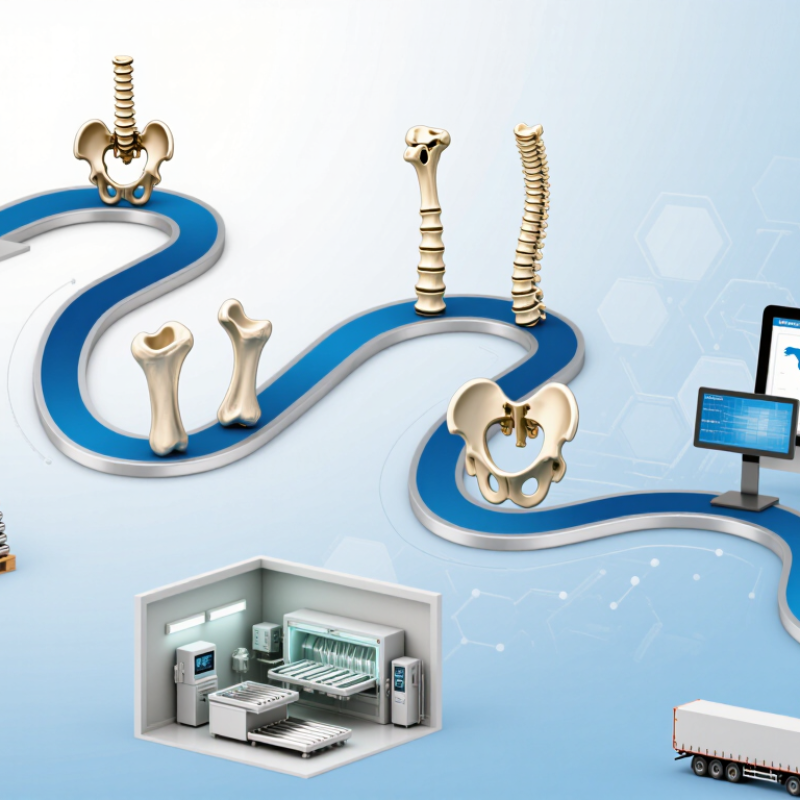
2026 Top Factors Affecting Orthopedic Implant Supply Stability?

Orthopedic Implant Supply Stability: Definition and Scope

Orthopedic implant supply stability means consistent access to safe, approved implants when hospitals need them. It covers more than factory output. The scope includes raw materials, component machining, sterilization, quality release, transport, inventory, and clinical demand. A stable supply should maintain delivery time, product specifications, traceability, and emergency availability.

The market is expanding, but growth does not guarantee resilience. MedTech Europe’s 2024 industry facts report values Europe’s medical technology market at about €170 billion, with more than 930,000 jobs. Orthopedic implants represent only one segment, yet they depend on shared resources, including titanium, cobalt-chromium alloys, polymers, and specialized coating services. A single delayed inspection or sterilization batch can affect operating-room schedules. Small disruptions matter.

Reports often measure market value better than actual hospital readiness. That is a weakness. The 2024 Deloitte Global Health Care Outlook highlights persistent pressure from labor shortages, inflation, and geopolitical uncertainty across healthcare supply chains. For orthopedic procurement, stability should therefore be measured through supplier concentration, safety-stock days, lead-time variation, recall response, and alternative-source qualification. Experience from hospital purchasing shows that a low price can hide fragile continuity. More data is still needed, especially for regional implant inventories and contract-manufacturing capacity.

Raw Material Availability and Manufacturing Capacity

2026 Top Factors Affecting Orthopedic Implant Supply Stability?

Raw material availability will remain a practical constraint for orthopedic implant makers in 2026. The U.S. Geological Survey’s Mineral Commodity Summaries 2025 estimated U.S. titanium sponge production at 24,000 metric tons in 2024. Domestic output helped, but imports still mattered. Medical-grade titanium also requires strict melting, testing, and traceability. A shipment delay can therefore affect production weeks later. Small disruptions become expensive.

The European Commission’s 2024 Critical Raw Materials Act identifies titanium metal as strategically important for Europe’s industrial resilience. This classification reflects supply concentration and geopolitical exposure. Manufacturers need qualified secondary sources, safety stock, and earlier purchasing decisions. That sounds simple. It is not. Alternative suppliers may lack validated processes or suitable furnace capacity. Switching too quickly could create quality risks.

Manufacturing capacity is the second pressure point. Orthopedic production depends on specialized forging, casting, machining, surface treatment, and sterilization steps. Capacity cannot expand overnight. Equipment installation, operator training, process validation, and regulatory documentation take time. Industry forecasts often assume smooth investment. Reality is less tidy. A factory may have open machine hours but still lack qualified inspection staff. Supply teams should track material lead times, furnace utilization, rejection rates, and supplier qualification status together. Price alone is a weak warning signal.

Regulatory Changes and Quality Compliance

Regulatory changes now shape orthopedic implant supply stability as much as raw materials do.

The FDA’s Quality Management System Regulation becomes effective on February 2, 2026. It aligns U.S. requirements more closely with ISO 13485:2016. Manufacturers must strengthen design controls, supplier oversight, complaint handling, and audit records.

Small documentation gaps can delay a production release. They can also trigger repeated inspections.

The European Commission’s MDR transition timetable sets key deadlines in 2027 and 2028, depending on device classification. This creates uneven pressure across global supply networks. A supplier may meet one market’s rules but still require additional evidence elsewhere.

The 2024 MedTech Europe regulatory environment data also highlighted continuing certification and notified-body capacity constraints. These constraints can extend approval timelines. Quality compliance is not paperwork alone. It affects available inventory, surgical scheduling, and emergency replenishment.

We should admit one weakness: many risk assessments still focus on tier-one suppliers, while critical coating or sterilization steps remain hidden upstream.

Tips:

  • Build a live compliance map for every implant family.
  • Track certificate expiry dates, audit findings, material changes, and validation status.
  • Request evidence from lower-tier suppliers, not only distributors.
  • Use dual sources where technically practical.
  • Test recall and traceability procedures with a mock batch.
  • A clean spreadsheet is not proof of control.

FDA QMSR Final Rule, 2024; European Commission MDR transition guidance, 2024.

Global Logistics, Trade Policies, and Geopolitical Risks

2026 Top Factors Affecting Orthopedic Implant Supply Stability?

Orthopedic implant supply stability now depends on more than factory capacity. Ocean freight delays, port congestion, and sudden air cargo restrictions can disrupt scheduled procedures. A shipment may leave on time, yet miss a hospital delivery window by several days. That gap matters. Hospitals need clear inventory thresholds, verified alternate routes, and regular supplier communication. Practical teams also track sterile packaging, customs documents, and implant-specific traceability records before dispatch.

Trade policies add another layer of uncertainty. Tariff changes can increase the cost of metals, polymers, packaging, and specialized instruments. New customs rules may also require different certificates or product classifications. These details create avoidable delays when documentation is incomplete. Regional sourcing can reduce exposure, but it does not remove risk. A local supplier may still depend on overseas raw materials or one specialized machining process.

Geopolitical tension can affect shipping lanes, energy prices, payment systems, and access to critical materials. Companies should map tier-two and tier-three suppliers, not only direct contractors. They should test realistic disruption scenarios, including border closures and restricted airspace. However, risk models are never perfect. A dashboard can miss a small port strike or an unexpected regulatory decision. That weakness deserves honest review. Experienced supply teams combine data with direct conversations, documented contingency plans, and frequent audits. Sometimes, the simplest control is a verified second source.

How to read the chart

These latest published global indicators provide context for orthopedic implant supply stability. Logistics performance is measured on a 0–5 scale, trade-policy exposure represents the share of global imports affected by import restrictions, and geopolitical risk is represented by the number of state-based armed conflicts. The indicators use different units and should not be combined into a single score.

Sources: World Bank Logistics Performance Index 2023; World Trade Organization Trade Monitoring Report 2023; Uppsala Conflict Data Program, 2023.

Demand Forecasting, Inventory Control, and Supplier Resilience

Demand forecasting is becoming the first control point for orthopedic implant supply stability. The United Nations World Population Prospects 2024 projects that people aged 65 and older will reach 16% of the global population by 2050. This shift may increase demand for joint reconstruction and trauma procedures. Hospitals should forecast by procedure, implant size, and surgical season, not by annual volume alone. A sudden rise in revision surgeries can quickly empty uncommon sizes.

Forecasts still fail. A practical model combines surgeon schedules, historical utilization, referral trends, and regional disease patterns. The OECD Health at a Glance 2023 report shows major differences in joint replacement activity between countries. Therefore, one standard demand curve cannot serve every market. Monthly review meetings should challenge unusual assumptions. Sometimes, a smaller buffer is safer than excessive stock with limited shelf life.

Inventory control needs visible, location-level data. Teams can set separate safety-stock rules for high-volume implants and rare configurations. Barcode scanning, expiry monitoring, and consignment reconciliation reduce hidden losses. Supplier resilience also requires more than a second quotation. The 2024 World Economic Forum Global Risks Report identifies supply-chain disruption as a continuing business risk. Buyers should assess alternate manufacturing sites, raw-material exposure, validated capacity, and recovery times. Dual sourcing can help, but qualification delays remain a weakness. Regular supplier stress tests, documented escalation contacts, and modest regional buffers make disruptions easier to manage. Yet these controls cost money, and smaller hospitals may need shared planning networks rather than duplicated inventory.

2026 Top Factors Affecting Orthopedic Implant Supply Stability? - Demand Forecasting, Inventory Control, and Supplier Resilience
Supply-Stability Factor Relevant Data Dimension Verified Reference Data 2026 Planning Signal Potential Supply Impact Recommended Control Measure
Population Aging Population aged 60 years and above Approximately 1.1 billion people were aged 60+ globally in 2023. The United Nations projects this population to reach approximately 1.4 billion by 2030. Long-term structural growth in demand for joint-replacement and fracture-fixation products. High Use age-adjusted procedure forecasts by region and maintain separate demand scenarios for elective and trauma procedures.
Elective Procedure Volatility Backlog, procedure cancellations, and operating-room utilization Elective procedures can be deferred during infectious-disease waves, staffing shortages, hospital capacity constraints, or payer-policy changes. Demand may shift between quarters even when annual procedure volume remains stable. High Run monthly rolling forecasts, monitor cancellation rates, and use a three-scenario model covering base, delayed-demand, and surge-demand cases.
Trauma-Demand Uncertainty Emergency admissions and seasonal injury patterns Trauma demand is less predictable than elective demand and is affected by seasonal activity, weather events, road-safety patterns, and regional emergencies. Maintain rapid-response inventory for high-use trauma sizes and configurations. High Set service-level targets separately for trauma and elective products; position critical stock close to major treatment centers.
Forecast Accuracy Weighted absolute percentage error, forecast bias, and forecast horizon Forecast accuracy generally decreases as the planning horizon increases and is lower for new products, low-volume sizes, and irregular-demand items. Product-level forecasts should be refreshed at least monthly, with exception-based review for high-value or critical items. High Track forecast error by product family, region, and demand type; use bias alerts when forecasts consistently overstate or understate demand.
Inventory Policy Safety stock, reorder point, inventory turns, and stockout rate Safety stock requirements increase with demand variability, supplier lead-time variability, and the required service level. Critical implants require higher protection than predictable, frequently replenished products. High Calculate safety stock using demand and lead-time variability; apply differentiated policies for critical, standard, and low-volume items.
Supplier Lead-Time Reliability Average lead time, lead-time standard deviation, and on-time-in-full delivery Long and variable lead times increase working-capital requirements and make shortages more likely, even when average demand is accurately forecast. Lead-time variability should be treated as a separate risk from average lead time. High Measure supplier performance monthly, include realistic buffers in planning, and establish escalation thresholds for repeated late deliveries.
Single-Source and Geographic Concentration Share of critical parts dependent on one supplier, site, or country Single-source exposure creates a direct interruption risk from natural disasters, labor disruptions, utility failures, regulatory actions, or transportation restrictions. Critical components with no qualified alternative should receive formal continuity plans. High Map tier-one and tier-two suppliers, qualify alternate sources where feasible, and maintain documented recovery-time and recovery-point objectives.
Raw-Material Availability Availability of titanium, cobalt-chromium alloys, stainless steel, polymers, and packaging materials Orthopedic implants depend on specialized materials, certified processing, and controlled surface-finishing capabilities; substitution may require technical and regulatory review. Material shortages can affect production even when final-product demand is unchanged. Medium to High Monitor material lead times and allocation notices, approve technically equivalent materials in advance where permitted, and hold risk-based material reserves.
Quality and Regulatory Release Nonconformance rate, batch-release time, audit findings, and corrective-action closure time Implant production requires traceability, validated processes, controlled documentation, and release decisions that can delay shipment when deviations occur. Quality events may create sudden supply gaps because affected lots cannot be distributed until resolved. High Integrate quality data into supply planning, maintain lot-level traceability, and review open corrective actions for potential capacity impact.
Manufacturing Capacity and Tooling Qualified production capacity, machine utilization, sterilization capacity, and tooling availability Specialized machining, coating, additive manufacturing, cleaning, and sterilization steps can become bottlenecks when capacity is highly utilized. Capacity risk rises when utilization remains near maximum and recovery options are limited. High Track capacity by constrained process, reserve contingency slots, validate alternate equipment, and avoid relying solely on nominal capacity.
Transportation and Logistics Disruption Transit time, customs clearance time, lane reliability, and expedited-shipment frequency International supply chains are exposed to port congestion, air-freight constraints, customs delays, extreme weather, and route disruptions. Critical products may need regional inventory positioning rather than a single centralized distribution model. Medium to High Use alternative transport lanes, pre-approve emergency freight procedures, and maintain regional buffers for products with long replenishment times.
Sterilization and Packaging Capacity Sterilization queue time, packaging-material availability, shelf-life, and release throughput Sterilization and packaging are essential final-stage processes; a bottleneck at either stage can delay otherwise completed implants. Final-stage capacity should be included in end-to-end supply calculations. Medium Monitor queue time and capacity utilization, qualify alternate service capacity where possible, and avoid excessive dependence on a single final-processing route.
Digital Supply-Chain Visibility Electronic data interchange coverage, inventory accuracy, supplier milestone visibility, and alert response time Incomplete or delayed data prevents early detection of shortages, late orders, quality holds, and transportation interruptions. Near-real-time exception management will become more important as product portfolios and supplier networks grow. Medium Create a control tower using common item identifiers, supplier milestones, inventory positions, demand signals, and automated exception alerts.
Workforce and Technical Skills Qualified-operator coverage, absenteeism, training time, and succession depth Specialized machining, inspection, finishing, quality, and regulatory activities often require trained personnel and documented competency. Labor shortages can reduce effective capacity even when equipment is available. Medium Use cross-training, skills matrices, documented work instructions, and backup staffing plans for critical operations.
Supplier Financial and Continuity Risk Financial health, payment exposure, backlog, insurance coverage, and business-continuity maturity Supplier financial stress can reduce maintenance, staffing, raw-material purchasing, and delivery reliability before a formal interruption occurs. Early-warning monitoring is particularly important for specialized or low-volume suppliers. Medium Conduct risk-based supplier reviews, maintain continuity documentation, define notification requirements, and prepare qualified alternatives for critical items.
Data note: The population figures are based on United Nations population-aging projections. The remaining indicators are established supply-chain planning dimensions and operational control measures; they should be calibrated with organization-specific demand, lead-time, quality, capacity, and inventory records before use in financial or regulatory decisions.

FAQS

Why do regulatory changes affect orthopedic implant supply stability?

New quality rules require stronger design controls, supplier checks, complaint handling, and audit records. Small gaps can delay production release.

How can certification deadlines disrupt international supply?

Different markets may require different evidence. Certification shortages can extend approvals and reduce available inventory.

What should a compliance map include?

Track certificate expiry dates, audit findings, material changes, validation status, and every implant family. Keep it live.

Why should companies inspect lower-tier suppliers?

Critical coating or sterilization work may occur upstream. Direct suppliers can hide these dependencies.

How do shipping delays affect surgical scheduling?

A shipment can depart on time but miss delivery by several days. Hospitals need inventory thresholds and alternate routes.

Which logistics details require verification before dispatch?

Check sterile packaging, customs documents, delivery routes, and implant-specific traceability records. One missing document can stop movement.

Can regional sourcing remove supply chain risk?

No. A local supplier may still depend on overseas materials or one specialized machining process. The risk may only move.

How should companies prepare for geopolitical disruptions?

Map second- and third-tier suppliers. Test border closures, restricted airspace, port strikes, and sudden energy price increases.

Is a digital dashboard enough for supply risk management?

Not always. It may miss a small port strike or unexpected rule change. Direct conversations still matter.

What practical test can reveal weak traceability?

Run a mock batch recall. Follow each implant from raw material records to hospital delivery. The spreadsheet may look cleaner than reality.

Conclusion

Orthopedic implant supply stability in 2026 depends on the ability of manufacturers and healthcare systems to maintain consistent access to essential materials, production capacity, and quality-controlled manufacturing. What affects the stability of orthopedic implants supply includes the availability and price of metals, polymers, and other specialized inputs, as well as equipment capacity, workforce skills, and production flexibility. Regulatory updates and stricter quality compliance requirements can also influence timelines, costs, and the release of products.

Global logistics, trade policies, transportation disruptions, and geopolitical uncertainty may further affect the movement of materials and finished implants. At the same time, accurate demand forecasting is essential for balancing inventory without creating shortages or excessive stock. Strong inventory controls, diversified sourcing, transparent supplier communication, and resilient contingency planning can help manufacturers and healthcare providers respond to unexpected changes. Overall, supply stability requires coordination across sourcing, production, compliance, logistics, and demand management.

Madeline

Madeline

Madeline is a dedicated marketing professional with a wealth of expertise in our company's core offerings. With a keen understanding of the industry, she brings a unique perspective to her role, consistently delivering high-quality content that highlights the superior aspects of our products. As......